
A letter arrived in our inbox last week that we’re going to run in full before getting into the analysis it prompted — partly because it’s funny, and partly because everything in it turns out to check out.
Subject: On Cake, Concerns, and the Surveillance State
Most esteemed Keepers of the Files,
My Melange has gone cold, which happens whenever the morning news proves more unsettling than room-temperature espresso.
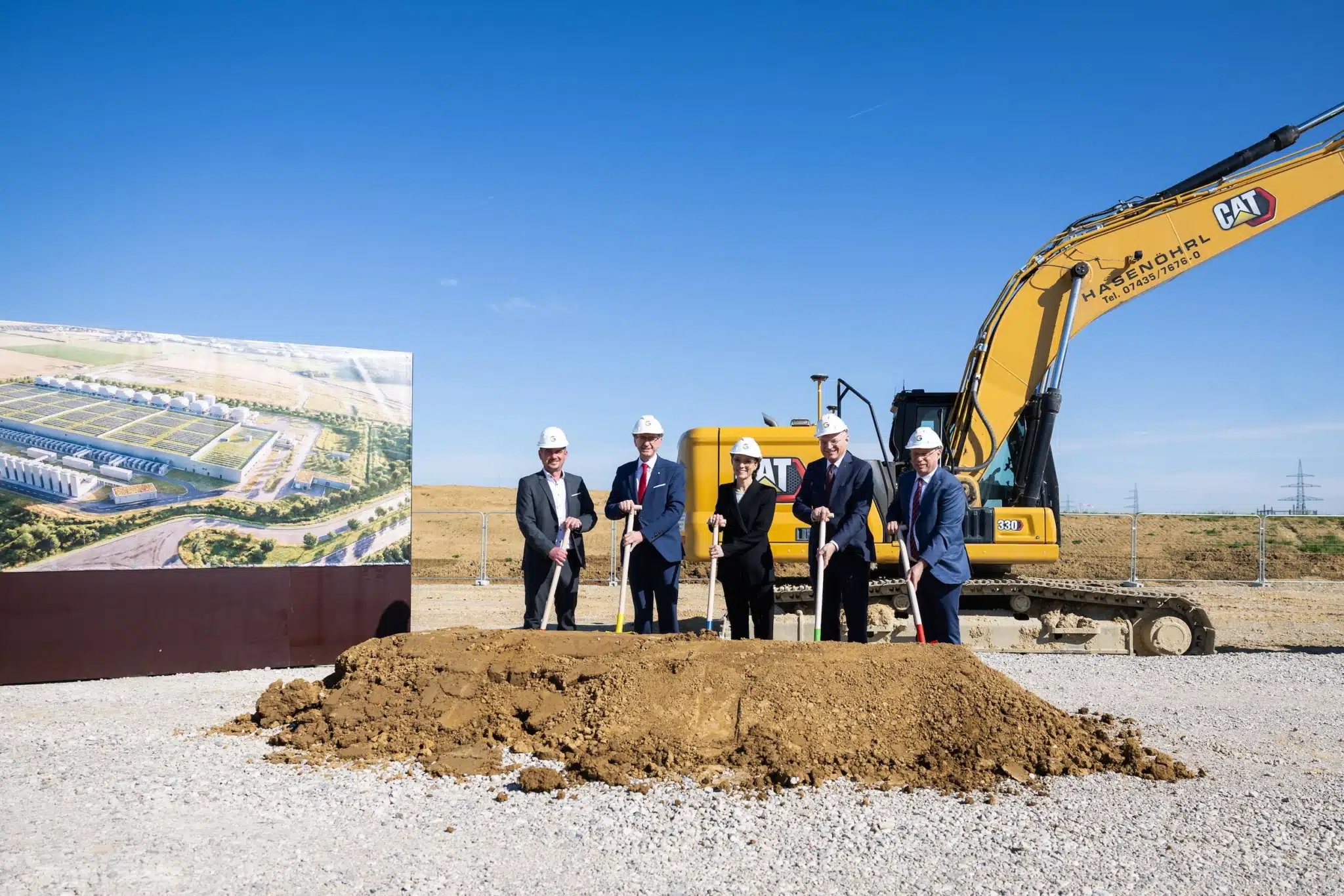
I am told the mayor of Kronstorf handed Google’s regional director a Googlhupf at the official groundbreaking. A stroke of culinary genius for the digital age, really: empty in the center, riddled with air pockets, and left to dry out on a counter while the neighbors wonder where their water went. I do not know whether to applaud such high-level Austrian diplomacy or quietly light a candle for the local baker who was forced to frost that monument to our own capitulation.
Two hundred villagers stood outside the construction site in July with a rather less digestible chant—something about their soil and their water being stolen. But one need not worry: I am reliably informed their concerns were “taken seriously.” That is the mandatory liturgical formula, delivered with a straight face by Herr Landesrat Achleitner. One must never doubt a statesman who calls an industrial data farm an “international proof of trust.” Trust in what? The infinite compliance of the native population? He did not elaborate; to ask would be a vulgar breach of etiquette.
The official PR reassures us that the cooling water returns to the river Enns “only slightly warmed.” Naturally, the glossy brochures omit the minor engineering reality that hyper-sensitive server racks do not take kindly to muddy river silt. For the delicate computational palate, nothing less than the purest, deep-well mineral water will suffice—pumped quietly from our regional aquifer and evaporated into the Upper Austrian sky so an AI can shave four milliseconds off an ad banner. A spa treatment for the trout, a slow puncture for the water table, and a dry cake for the peasants. One must admire the efficiency.
Speaking of efficiency, my gaze drifted North today—to Berlin, where Finance Minister Klingbeil has unveiled his new Eckpunkte. By 2027, every Döner stand and flower stall in the Republic will be legally compelled to accept digital card payments. The official sermon calls this Wahlfreiheit—the sacred freedom to choose which private corporation harvests your spending habits.
Watching the Germans perform their ritualistic self-surveillance is always a treat. It is a peculiar national pastime: they are terrified of cash, as if it carries a contagion, and yet they treat the mandatory digital paper trail as a badge of moral superiority. They call it a “crusade against financial crime,” as if international cartels are laundering their billions through the widow selling gladioli at the Wednesday market. One can only assume the criminal underworld is terrified of the tax authorities, rather than—as one might suspect—entirely integrated into the ministerial boardrooms.
It is a charming pantomime, and we would do well to watch closely. The Germans truly believe they are building a cathedral of progress; we in the South know we are just rearranging the deck chairs on the Titanic. The only difference is that I am currently sipping my coffee, while our neighbors in the North are arguing over the proper, state-mandated temperature of the water we are all about to sink in.
I have taken the liberty of drafting a note of thanks on behalf of all of us, which you may forward as you see fit: “Dear authorities, thank you for taking our concerns seriously enough to ignore them entirely, and for framing every systematic seizure as a benevolent service for our own protection. We remain, as ever, profoundly grateful and slightly thirsty.”
I do not expect this letter to change the course of history. I am merely cataloging the grain of the wood as the ship slips beneath the surface—a private hobby, not a rescue mission. But I thought the TMF Archive should have it on record, for whoever is left to turn out the lights when the grid finally collapses under the weight of its own brilliance.
With a heavy heart and a cold cup,
— Name withheld, known to the editors
What sounded as a “joke” about the aquifer isn’t an exaggeration. Here’s what’s actually in the permit.
What’s happening in Kronstorf, in numbers
Google’s Austrian data center, currently under construction on roughly 50 hectares outside Kronstorf, Upper Austria, draws its cooling water from groundwater wells near the Enns river — specifically Uferfiltrat, bank-filtrate groundwater drawn from the aquifer beside the river. Under the water-rights permit issued by the provincial government, the facility may extract up to 202.78 liters per second, capped at 5.55 billion liters a year. The water circulates through the cooling system multiple times; a portion evaporates outright in the process, removed permanently from the local water cycle, while the remainder is discharged back into the Enns warmed by up to several degrees, at a maximum temperature of 30°C and a volume of up to 5.8 million liters a day.

The neighboring municipality of Hargelsberg, roughly two kilometers from the site, has already issued official warnings about falling groundwater levels and asked residents to conserve. Around 200 people demonstrated at the construction site in July, chanting that their soil and water were being taken; Landesrat Markus Achleitner called the project “an international proof of trust for Upper Austria” and said residents’ concerns were “taken seriously.” The project’s first construction phase alone is projected to draw up to 1.3 terawatt-hours of electricity a year — comparable to the annual consumption of 375,000 households — with a possible second phase reaching 4.4 TWh, nearly a third of Upper Austria’s entire current electricity consumption. Because the facility falls just under the legal threshold that would trigger a full environmental impact assessment, no such assessment is currently required. The environmental group Global 2000 and the SPÖ’s environmental spokesperson, Julia Herr, are now pushing to close that threshold specifically for data centers.
Put plainly: a naturally filtered, mineral-bearing aquifer — the same category of resource people once traveled to Spa to drink because it tasted better than what came out of their own tap — is being pumped up, run once through machinery as a heat sink, and returned partly as vapor and partly as warmed effluent. Nothing about this requires a theory of living water to be alarming. The permit numbers do the work by themselves.
The Cups, again
We wrote several weeks ago about the Elucidation — the thirteenth-century Grail prologue in which King Amangon and his knights force themselves on the well-maidens of Logres and steal their golden cups, and the land collapses into the Terre Gaste, the Wasteland, for want of reciprocity. [Readers who haven’t seen that piece can find it here.] We won’t repeat the argument. But Kronstorf makes the myth’s mechanism almost embarrassingly literal: something offered freely by the land, taken by force dressed as commerce, a gift-cake handed over in place of an apology. The medieval story and the 2026 planning permit are describing the same transaction.
The pattern is not new, and it is not partisan
What makes Kronstorf worth a full article rather than a paragraph is that it isn’t an isolated case. The same mechanism — a resource taken faster than it replenishes, justified by whichever ideology happens to be in power, with the damage externalized onto people who weren’t consulted — recurs across wildly different political systems and different centuries.
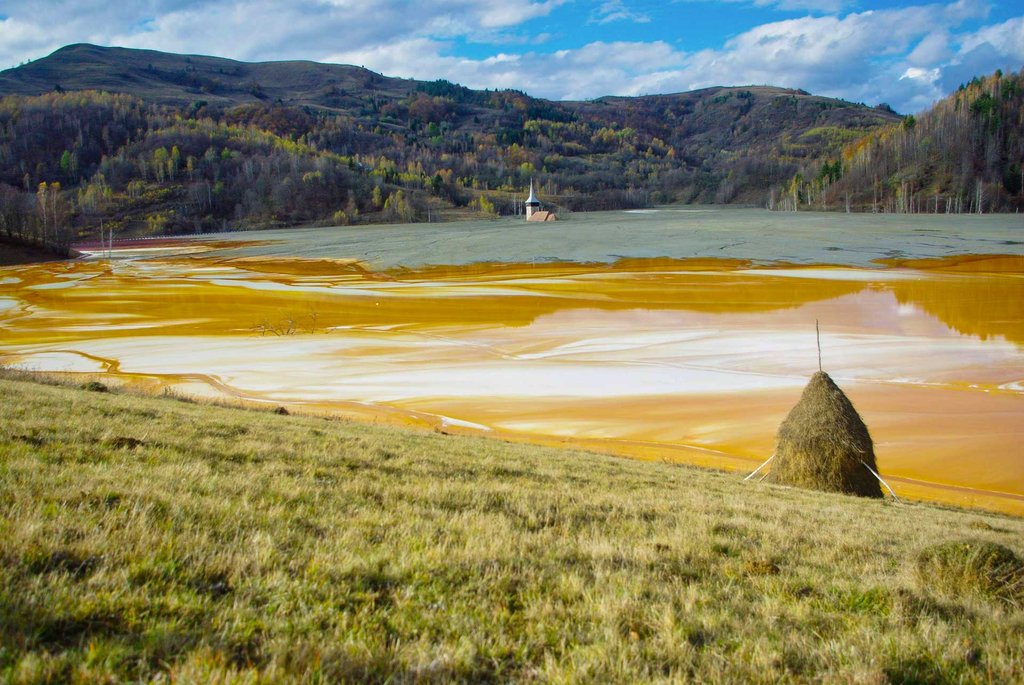
Geamăna, Romania — 1977 to today. Under Ceaușescu’s communist regime, the state opened the Roșia Poieni copper mine, one of Europe’s largest copper deposits, and needed somewhere to put the cyanide-laced tailings. It chose the inhabited valley of Geamăna. Roughly 400 families were evacuated over the following years as a toxic lake rose slowly — first over the gardens, then the wells, then the houses, then the cemetery, which the government had promised to relocate and never did. Today the church tower is the only structure still visible, rising out of a lake the color of rust. A small number of residents still live on the hillside above it. This is the Terre Gaste with no metaphor left in it at all.
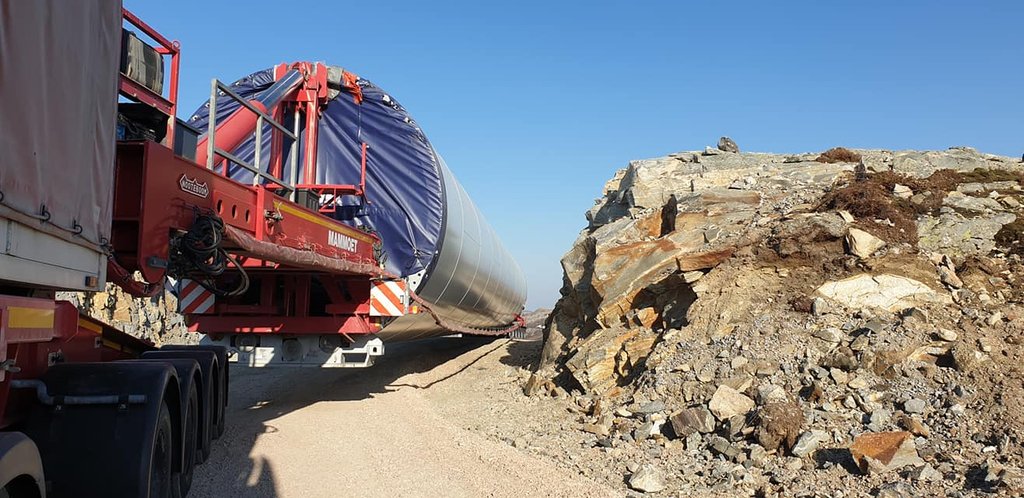
Storheia and Roan, Norway — 2016 to today. Fosen Vind’s onshore wind development, part of Europe’s largest onshore wind power project, cleared pristine coastal mountain terrain — blasted rock, cut roads, cleared forest — to build turbines explicitly justified as climate policy. In October 2021, Norway’s own Supreme Court ruled unanimously that the Storheia and Roan turbines violate the human rights of Indigenous Sámi reindeer herders under Article 27 of the UN’s civil and political rights covenant, since their winter grazing land was destroyed to build them. As of this writing, more than four years later, the turbines are still standing and still operating. Some of the most sustained opposition has come from Norwegian environmental groups themselves, not from industry.
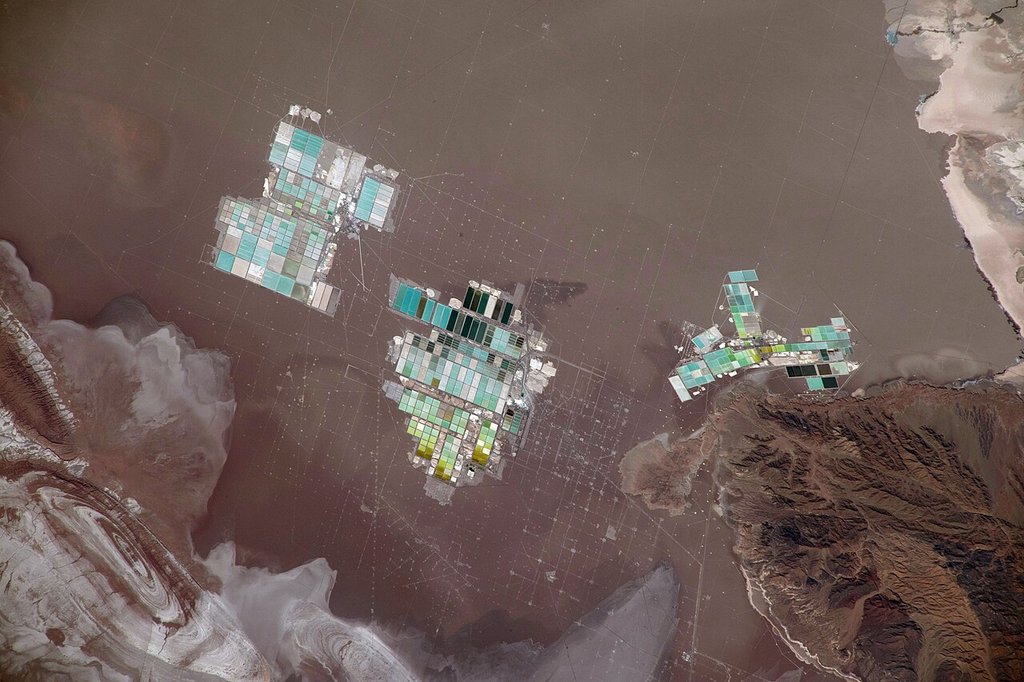
Salar de Atacama, Chile — ongoing. One more case, briefly, because by now the shape should already be recognizable. Lithium extraction for EV batteries draws brine from beneath the Atacama salt flat at a pace regulators themselves have flagged as unsustainable, in one of the driest places on Earth. The Atacameño communities who depend on the same aquifer, and the flamingo colonies nesting in the salt flat’s shallow lagoons, both show measurable water stress as extraction continues. The end product is marketed as the solution to environmental damage, not a cause of it.
Four systems — a market-economy tech giant, a communist five-year plan, a market-economy green-energy consortium, and the green-technology supply chain itself. Four different stated virtues — profit, industrial development, climate action, and clean energy. Same underlying transaction, every time: take the resource now, externalize the cost onto whoever’s downstream, and describe the taking as a gift.
We’ll return to this pattern in future pieces — the Energiewende’s coal rebound after Germany’s nuclear phase-out, and the EU biofuel mandate’s role in tropical deforestation, both belong in the same cluster and each deserves its own full accounting rather than a paragraph here.
For now: the well-maidens withdrew into silence, and the land went to waste. Eight hundred years later, we’re still writing the same story down, just with better documentation.
