
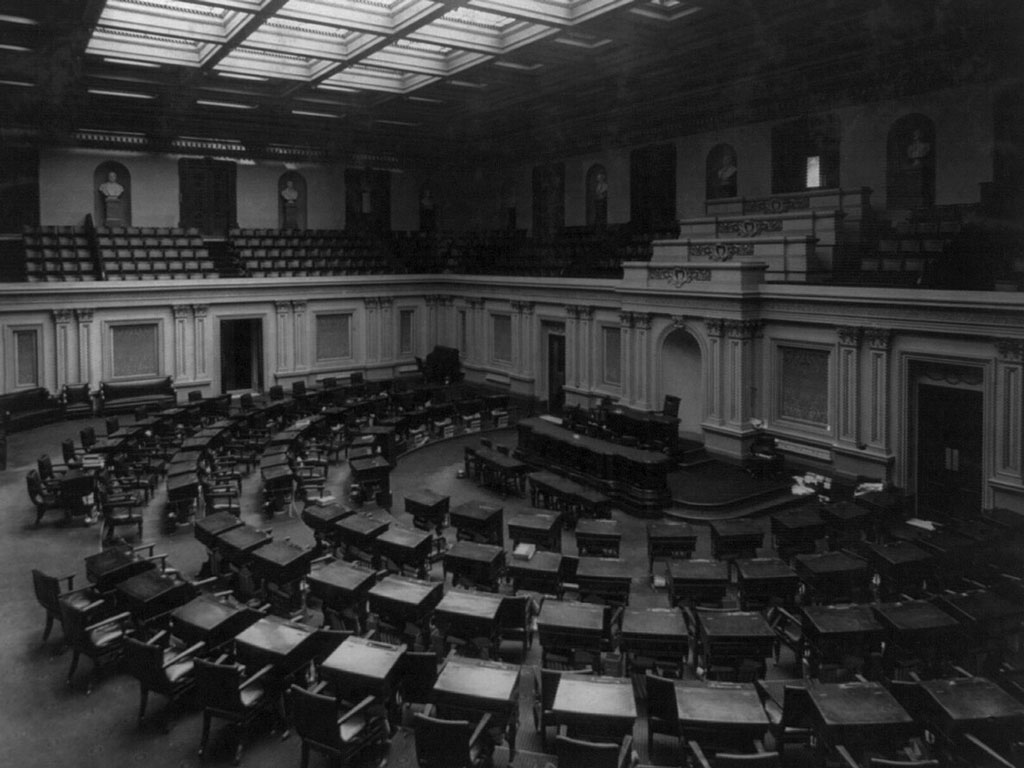
On April 13, 1989, after two and a half years of hearings, a U.S. Senate subcommittee released a four-hundred-page report with a six-hundred-page appendix. Its chairman was Senator John Kerry. Its title was dry: Drugs, Law Enforcement and Foreign Policy. Its conclusion was not.
“It is clear that individuals who provided support for the Contras were involved in drug trafficking… and elements of the Contras themselves knowingly received financial and material assistance from drug traffickers.”
Buried further in were the receipts. The U.S. State Department had paid more than $806,000 to known drug traffickers to carry supplies to the Contras — in some cases after those same men had already been indicted on drug charges by other arms of the federal government. The report’s own language, describing the mindset inside the policy apparatus at the time, was blunt: senior U.S. policy makers were not immune to the idea that drug money was a perfect solution to the Contras’ funding problem.
The Committee was careful, and it is worth being equally careful here. It did not find Contra leadership personally directing narcotics shipments, and it found no evidence of direct CIA participation in the trafficking itself. What it found, and documented, was something narrower and in some ways more interesting: an operation that needed money faster than Congress was willing to appropriate it, moving through a world where the easiest money available belonged to people already breaking the law. A decade later, the CIA’s own Inspector General, reviewing the same ground internally, reached conclusions that confirmed rather than contradicted Kerry’s report.
The Same Consortium, a Different Product
The previous article on these pages traced how an American intelligence agency, working through the Congress for Cultural Freedom, financed the international rise of Abstract Expressionist painting — quietly picking which artists became the reserve currency of postwar taste, with a Rockefeller-chaired museum and a national magazine amplifying the result. That operation required no fraud and broke no law. It was soft power, openly discussed today in the CIA’s own declassified files.
What it shares with the Contra-era financing is not method but function. Both were solutions to the same problem: an agency needed resources and legitimacy that its visible, appropriated budget could not provide fast enough or without asking questions. In one case, the product being manufactured was cultural prestige. In the other, it was cash. The mechanism — an institution operating outside the normal channels of accountability, manufacturing what it needs rather than requesting it — is identical. Only the commodity changes.
A Bank That Needed No Permission
Between 1972 and 1991, a financial institution called the Bank of Credit and Commerce International operated across seventy-eight countries, holding assets that at their peak exceeded twenty billion dollars, without ever being subject to consolidated supervision by any single national regulator. It was chartered in Luxembourg, headquartered in London, and audited nowhere in particular — a structure that later investigators would describe less as a loophole than as a design choice.
When it collapsed in 1991, regulators found a decades-long pattern of fraud, and something else besides. A Senate investigation led by John Kerry and Senator Hank Brown, published in 1992 as The BCCI Affair, documented that the bank had been used to finance intelligence operations, move funds connected to the Iran-Contra affair, and process the accounts of arms dealers operating in regions where the visible financial system either could not or would not follow. Journalists at the time gave the institution an unofficial name that stuck for a reason: the Bank of Crooks and Criminals International.
BCCI was not a criminal enterprise that intelligence agencies happened to use. It was closer to the reverse — an institution whose lack of a single accountable jurisdiction made it structurally attractive to any actor, state or otherwise, that needed money to move without a paper trail leading anywhere in particular.
What the Barbershop Cannot Do
An earlier piece on these pages, How to Launder a Trillion, described the mechanism by which criminal cash acquires a clean origin story — the barbershop with no clients, the invoice that satisfies an external observer. That mechanism solves one problem: capital that already exists needs to look legitimate.
What BCCI and the Contra financing describe is a different and in some ways prior problem. The capital does not merely need to look clean. It needs to exist in the first place, off any ledger a legislature can review, fast enough to fund an operation before the next budget cycle makes the question moot. A barbershop launders money that is already dirty. An unaccountable bank, or an unaccountable cultural fund, or a payment routed to a man already under federal indictment, manufactures liquidity for an operation that was never going to survive a public vote.
⬥ ⬥ ⬥
Ninety cans of a certified artwork. Eight hundred thousand dollars paid to indicted traffickers. Twenty billion dollars moving through a bank audited by no one in particular. Different decades, different departments, the same appetite for value that answers to nobody.
What does it mean that the hardest thing to find, in the best-funded intelligence apparatus in the world, was ever a receipt?
