
In 1945, the NSDAP sent its membership files to a paper mill near Munich to be pulped. The order was not carried out.
That is where this story begins. Not with a crime, but with an index card that survived.
The villa
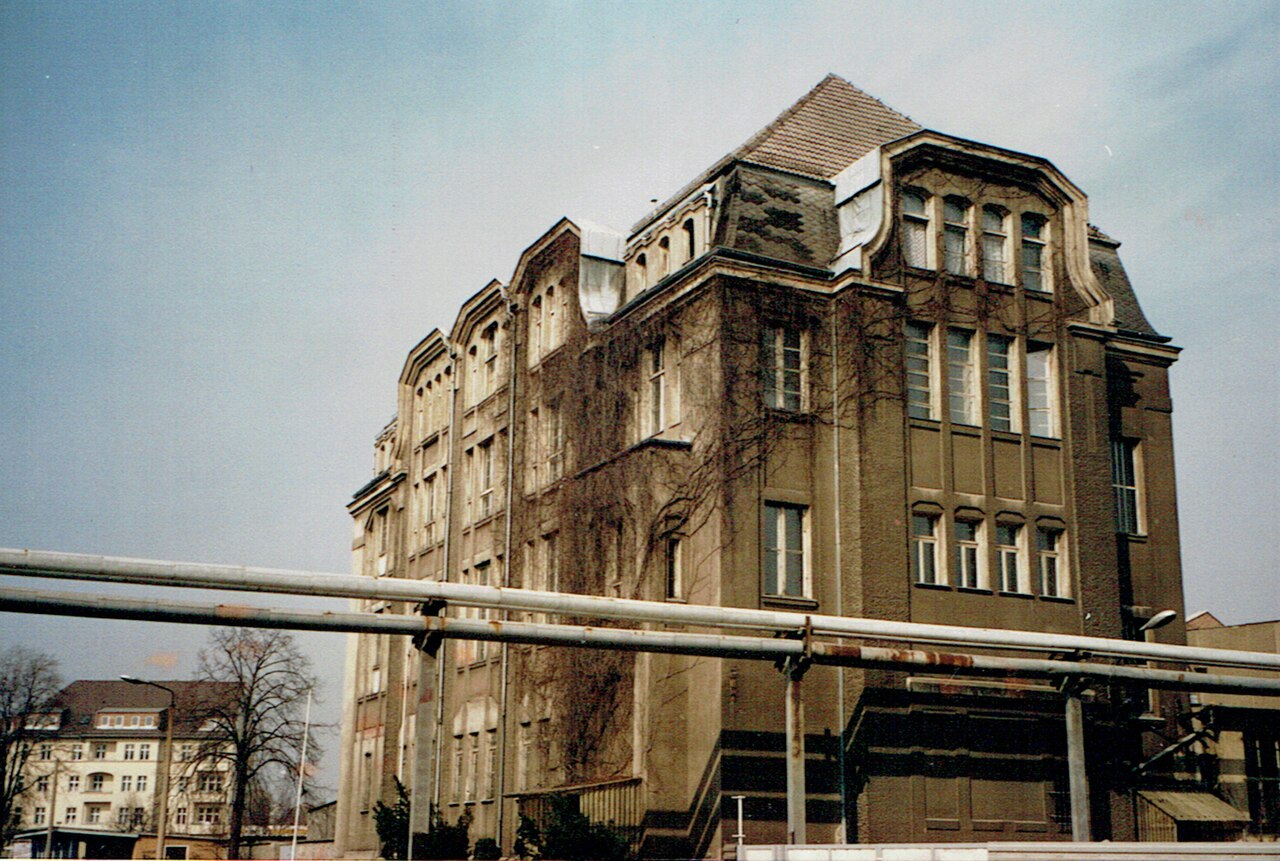
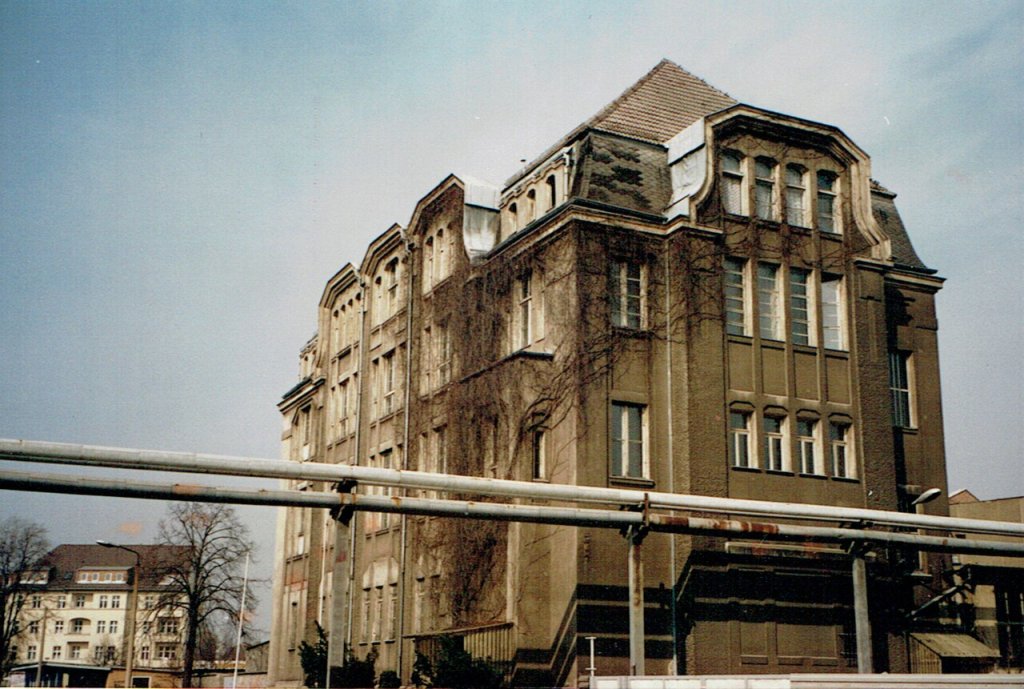
Freienwalder Straße 17 lies in Berlin-Hohenschönhausen, inside what was once a restricted zone of the Ministry for State Security. The building is known as Villa Heike. It served as a KGB prison before the Soviet Control Commission handed it to the Stasi in 1951.
From 1967, it housed a secret collection. Hauptabteilung IX/11 of the Ministry for State Security had a mandate to gather every document in the GDR from the years of the Third Reich, sort it, catalogue it, and make it usable for the secret police.
The department’s official task was the clearing up of National Socialist and war crimes. The collection grew to about ten kilometres of files.
Where the paper came from
No file in the villa arrived directly. German records seized by the Soviet occupation forces. Police and court records from the denazification proceedings in the Soviet zone. Files of the investigation service of the association of the persecuted. German records first evaluated in the Soviet Union and later handed over. Microfilmed German documents obtained from abroad.
Every page had already passed through more than one set of hands before it reached Hohenschönhausen.
Two uses
The Bundesarchiv, which holds the collection today, describes what it was for. The files were used, among other things, to expose politicians of the Federal Republic whose past had been concealed. And to press people in the GDR itself, whose past had not yet come to light, into collaboration.
The same drawer served two purposes. Outward, it produced headlines. Inward, it produced informants.
The other archive
In the West, the index cards from the paper mill had found a new owner. The US Army set up the Berlin Document Center after the war as a collection point for confiscated documents from the National Socialist era, to prepare the Nuremberg trials and denazification. It held the NSDAP membership index, today some 12.7 million cards, along with personnel files of the SS and the SA. About eighty per cent of the membership files survived.
The Berlin Document Center remained under American administration for almost half a century. Only after years of negotiation did the Bundesarchiv take it over, on 1 July 1994. The Americans kept copies on microfilm.
Two archives, one in each half of the city. One run by a German ministry under Soviet patronage, one by an American authority in a German suburb. The same kind of paper in both.
Why paper was worth so much
About 8.5 million Germans had been members of the NSDAP. In the American zone alone, thirteen million people over the age of eighteen filled in the denazification questionnaire, the Fragebogen, which eventually ran to 131 questions. By the end of 1950, the American High Commissioner counted almost thirteen and a half million registered persons in his zone, almost four million of them chargeable, and some 800,000 sanctioned.
In the tribunals that sorted Germans into five categories, from “major offenders” to “exonerated”, the burden of proof was reversed. The person charged had to prove that the law did not apply to him. More than half the proceedings ended with the verdict Mitläufer, follower, or with exoneration. Germans called the tribunals the Mitläuferfabrik: the follower factory.
At Nuremberg, the International Military Tribunal had declared the NSDAP’s political leadership corps, the Gestapo, the SD and the SS criminal organisations. The General Staff and the High Command of the Wehrmacht were not.
A file is worth what its exposure costs. In a country where millions had a card somewhere, a questionnaire somewhere, a category somewhere, the price of a single entry could be a career.
Pullach
In 1946, American occupation authorities set up a German intelligence service under Reinhard Gehlen, formerly head of the army’s Foreign Armies East department. The Gehlen Organisation took up its heavily guarded headquarters in Pullach near Munich, on the grounds of the former “Reichssiedlung Rudolf Heß”. In 1956 the Federal Republic took it over as the BND.
Numerous members of the former Security Police, the SS and the SD found shelter there or served as informants. In December 1953, Gehlen told a Bundestag committee that around forty of his employees came from the SS and SD.
In the 1960s, the policy came under criticism. It had become clear that precisely those staff members with a National Socialist past were a security risk, because they could be blackmailed.
One week in July
Heinz Felfe joined the SS in 1936 and the NSDAP shortly after. He served in the SD and in the Reich Security Main Office. After the war he worked for British intelligence from 1947 to 1949, and for Soviet intelligence from 1949. In November 1951 he joined the Gehlen Organisation. By 1958 he headed counter-intelligence against the Soviet Union in Pullach.
He was arrested on 6 November 1961. On 22 July 1963, the Federal Court of Justice sentenced him to fourteen years for treason.
Hans Globke was never a member of the NSDAP. As a senior official in the Reich Ministry of the Interior, he co-wrote the commentary on the 1935 Nuremberg race laws. From 1953 he was head of the Federal Chancellery under Konrad Adenauer.
On 23 July 1963, one day after the Felfe verdict, the Supreme Court of the GDR sentenced Globke in absentia to life imprisonment. The Federal Republic did not recognise the trial. Globke remained in office until Adenauer stepped down that October.
In the same week, a court in the West convicted a former SS officer for serving Moscow from inside the West’s intelligence service. And a court in the East convicted the West’s Chancellery chief for his past, with the paper it had kept for that purpose.
In 1969, Felfe was released to the GDR in an exchange of agents. He became a professor of criminalistics in East Berlin.
1990
On 3 October 1990, the Stasi’s collection passed to the Bundesarchiv and was opened to the public for the first time: about eleven thousand running metres in some sixty sub-collections. Four years later, the Berlin Document Center followed.
Both halves of the paper now belong to the same institution. Anyone can apply to read them.
In 1945, the party sent its membership files to a paper mill to be destroyed. Two German states and their protectors spent the next forty-five years making sure that never happened.
