
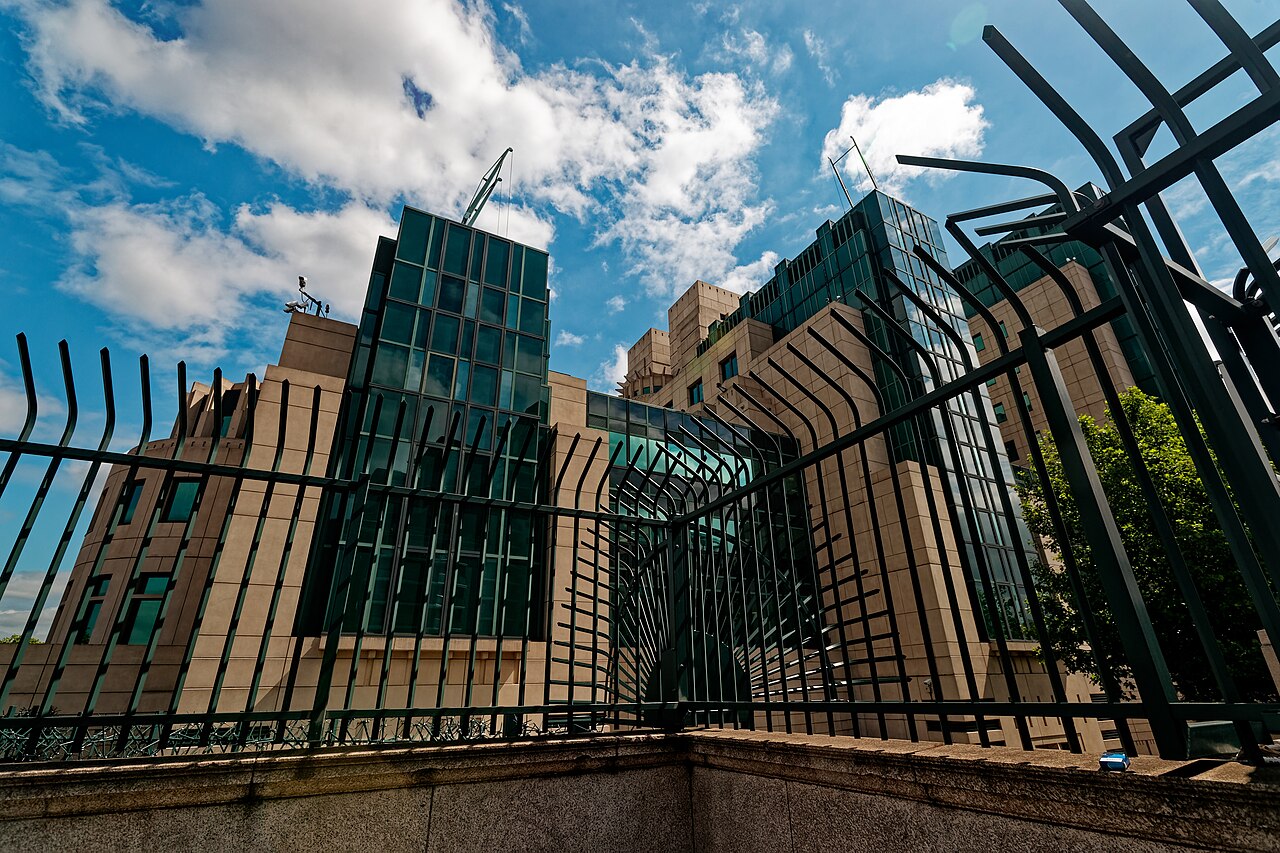
On Monday, 23 August 2010, police officers entered a flat in Pimlico, in central London, a short walk across the Thames from the headquarters of the Secret Intelligence Service. In the bath lay a large holdall, zipped and padlocked shut from the outside. Inside it was the body of the man who rented the flat.
His name was Gareth Williams. He was thirty-one, a Welsh mathematician, and a codebreaker. He belonged to GCHQ, the British signals intelligence agency, and had been on secondment to MI6 for most of the past three years. The keys to the padlock were inside the bag with him.
The Week
Williams had last been seen alive in the middle of August. He was never absent from work; his manager would later describe him as almost always punctual and never off sick. When he failed to appear, nobody at his office raised the alarm. Seven days passed before his line manager contacted his family.
They were seven days in the heat of an English August, in a flat where, the pathologists told the later inquest, the radiators had been turned on. By the time anyone looked, the body was too decomposed to show how he had died. The chances to read the room had gone with the week.
Two Probablies
The inquest sat at Westminster in the spring of 2012. A specialist who tried to lock himself inside an identical bag, hundreds of times, never managed it; he told the court that even Houdini would have struggled. No fingerprints of Williams were found on the padlock or the rim of the bath.
On 2 May 2012 the coroner, Dr Fiona Wilcox, gave her conclusion. Williams had, on the balance of probabilities, been killed unlawfully. She was sure that a third party had moved the bag into the bath. And she added a sentence that would turn out to be the most accurate thing anyone said about the case: it was unlikely that his death would ever be satisfactorily explained.
Eighteen months later the Metropolitan Police reached the opposite probability. In November 2013 a deputy assistant commissioner announced that, on balance, it was more probable that no other person had been present when Williams died, and that his death was most probably an accident. He was convinced, he said, that it was in no way linked to Williams’s work. He also conceded that no evidence had been found to establish the full circumstances beyond reasonable doubt. The coroner accepted the police findings, but saw no grounds to reopen her inquest.
In 2021 the police began a further forensic review. Its results arrived in November 2023 and were announced in February 2024: no new DNA, and no further lines of inquiry.
So the official record holds two answers, from two institutions of the same state, each prefaced by the same word. Probably killed. Probably alone.
The Paper
Eleven years before the bag in Pimlico, in Bonn, still the seat of the German government, a civil servant had spent the spring putting his name to a different kind of secret.
Ulrich Sandl headed the information security unit at the Federal Ministry of Economics. In 1999 he drafted the cabinet paper that would become the Eckpunkte der deutschen Kryptopolitik, the cornerstones of German encryption policy. Its core was a single decision: encryption methods and products could be developed, made, sold and used in Germany without restriction.

That was not a technical footnote. At the time, the American government was pressing for an encryption standard for the young internet that would have kept special access for its own security agencies. Sandl was on the other side of that table. Inside Bonn, too, the paper had opponents, above all in the security and intelligence services, who feared it would blind the police. For three weeks it waited for its last ministerial signature.
Ten Metres
In those weeks, Sandl fell from the window of his flat in Bonn, about ten metres to the ground. He lay in a coma for several days and survived narrowly. He has never been able to remember what happened. The Bonn police never solved the case.
On 2 June 1999 the last signature came, and the cabinet adopted his paper.
He returned to his ministry, and to the policy he had written. Later that year he could joke that he had been lucky: it was, he said, the same height the singer Rex Gildo had fallen from. He retired at the end of 2020. The cornerstones he drafted are still official German policy.
Whether the window in Bonn was an accident, nobody has ever officially said. Nobody has ever officially said it was anything else.
One man broke codes for the state. The other wrote that its citizens may keep their own. Between them lie eleven years, two windows of time nobody can account for, and two files that end where they began.
In London the coroner said probably killed and the police said probably alone, and both answers stand side by side in the archive. In Bonn there was not even a second answer to set against the first.
When a state disagrees with itself about how a man died, which of its answers is the truth, and who is left to decide?
⬥ ⬥ ⬥
Next: two former ministers who fell. One from the sixteenth floor of a naval hospital in 1949. One from the sky over Westphalia in 2003.
