The presents are unwrapped. The children’s excitement has peaked and begun to ebb. To the modern world, the mystery of Christmas is over. The main event has passed. They could not be more wrong. The truth, known to our forebears and now forgotten by nearly all, is that the real magic of Christmas only begins when the sun rises on December 25th. The holy night...
If last night was the deepest silence, then tonight is the moment that gives that silence its meaning. Heiligabend — the Holy Evening — arrives not with announcement, but with restraint. The world does not brighten yet; it holds its breath. The modern eye, dulled by repetition, sees only the threshold of a day devoted to gifts and tables heavy with food. Yet those who...
There is a silence so deep it becomes a kind of sound. You have felt it, perhaps, in a forest at twilight, or in a forgotten stone chamber. But there is one silence that reigns above all others, and we are in its heart right now. For three days, the sun has appeared to stand still in the sky. This is no illusion; it is a cosmic truth. The great engine of the world has paused. Today, December 23rd, the […]...
22 December. There is a map of the year that you will not find in any diary from the stationer’s. It is drawn not in ink, but in frost patterns on the windowpane and in the long, deep shadows cast by a low winter sun. It is a secret calendar, and its most important days are the ones that officially do not exist: the days...
As the sun reaches its lowest ebb and the longest night descends, a different kind of time begins. From December 21st through January 6th, the fabric of our world grows thin. This is the time of the Raunächte—the Rough Nights, the Smoky Nights, the time when the wheel of the year grinds to a halt, and the unseen world bleeds into our own. The very...
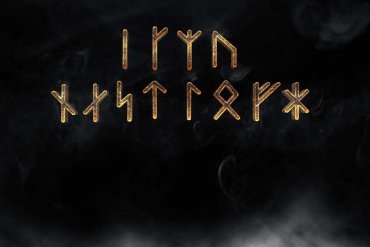
In the shadowed corridors of history, where myth and reality intertwine, the ancient runes stand as silent sentinels of a forgotten wisdom. These cryptic symbols, etched into stone, wood, and metal by our Germanic ancestors, are more than mere letters of an archaic alphabet. They are keys to a deeper understanding, bridges between the mundane and the divine, and whispers of a world where every shape and sign held profound meaning. On Maier Files Tidbits, we embark on a journey […]...
November brings a veil of enchantment to the Northern Hemisphere. Ancient traditions and winter lore weave a rich tapestry of myth and celebration, starting with Saint Martin’s Day, or Martlemas, on November 11th. In Dutch, Germanic, and Celtic lands, this day is more than a feast; it is a gateway to the mysterious winter season, filled with both heavenly and fearsome visitors. Saint Martin: The...
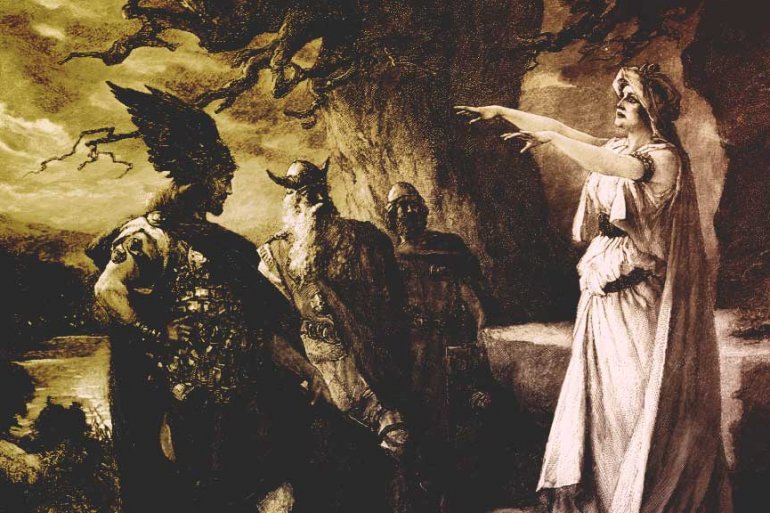
The Vǫluspá, one of the most remarkable poems of the Old Norse tradition, stands as a monumental piece of literature within the Poetic Edda. Its narrative recounts the creation of the world, its eventual destruction, and its prophesied rebirth. Within this grand cosmological scope, the Vǫluspá is presented as a prophecy delivered by a vǫlva, a seeress who commands great authority and wisdom. The poem,...
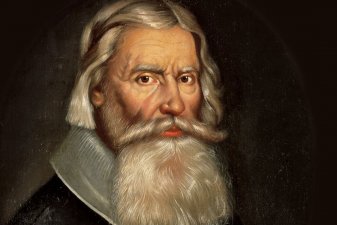
In the annals of Northern Europe during the Renaissance, amidst the flourishing of Hermeticism, Kabbalah, and Medieval magic, emerges an intriguing figure whose life and work spanned the realms of pre-Christian mythology and esoteric Renaissance knowledge. Johannes Thomae Agrivillensis Bureus, known simply as Johannes Bureus (1568-1652), embodies this unique fusion of disparate yet intertwined traditions. Despite the scarcity of information about him, his contributions to the study of Nordic mythology and runology, alongside his engagement with Renaissance esotericism, mark him […]...
Based on the latest archaeological and textual evidence, Children of Ash and Elm tells the story of the Vikings on their own terms: their politics, their cosmology and religion, their material world. Known today for a stereotype of maritime violence, the Vikings exported new ideas, technologies, beliefs, and practices to the lands they discovered and the peoples they encountered, and in the process were themselves...
Who’s Odin? To find Odin’s origins, how far back must we go? Although the most likely explanation for Snorri’s attempts to connect the Æsir with Troy is medieval literary fashion, it is tempting to see a possible source in folk memories of the migration of the Yamnaya culture from the steppes of the Caucasus and Urals into northern Europe four or five thousand years ago....
Hamingja, as used in the sagas, stands for an abstract conception, that of something belonging to an outstanding person which is partly a matter of character and partly of personality, and partly something more than either—that strange quality of ‘luck’ or luck-lessness’ which attaches itself to certain individuals more than others. It is something which can be handed on after death, and it usually remains within one family. It is usually connected with the name, so that if a child […]...