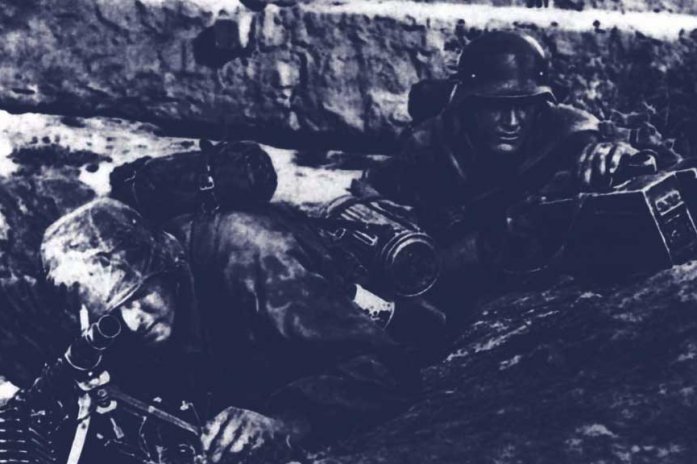
Between June 8 and June 13, 1944, the 6th Parachute Regiment under Colonel Baron Friedrich August von der Heydte held Carentan against three American divisions totalling more than 30,000 men. His regiment numbered 3,000. The supplies sent to him during that battle are documented. They require no commentary. Before the invasion began, the strategic importance of Carentan was not in...
World War 2
This category contains everything on the topic World War 2 and all articles are related to the Maier files series. The posts are short and relevant concerning subject areas associated to World War II
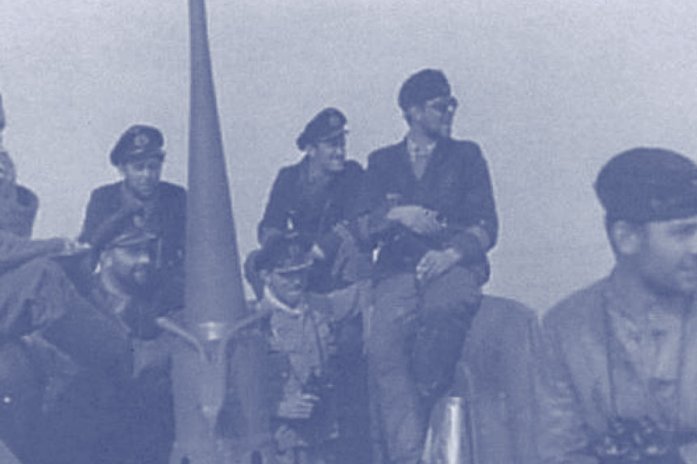
Six weeks before the Normandy landing, German E-boats intercepted the Allied invasion rehearsal off the Devon coast. Four of five troop transports were torpedoed. Hundreds of soldiers and sailors died. From the water, the E-boats recovered a dead American officer whose uniform contained readable invasion plans. The plans confirmed Normandy as the target. The rehearsal was called Operation Tiger. What...
On the night of June 5, 1944, the German military received at least four separate warnings that the invasion had begun. Not one of them triggered the coastal alarm. The standard account of D-Day rests on a comfortable explanation: the Germans were caught off guard. Their radar was blind, their command structure confused, their generals asleep. The invasion succeeded because...
Rudolf Hess was born on April 26, 1894. He died on August 17, 1987, in Spandau Prison, Berlin, at the age of 93. He had been imprisoned since 1941 — forty-six years. He had been sentenced to life at Nuremberg. He had no position to protect, no career to salvage, no freedom left to lose. And yet he kept a...
A child who survived it described the sound like a giant striking a drum. The house shook. There was no warning — or not enough of one. The people of Potsdam stayed in their cellars while the city above them was turned into light. Between 1,600 and 1,800 civilians died that night. The railway bridge went. The repair works went....
Today, four astronauts are passing the moon for the first time in over fifty years. The spacecraft is called Orion. The rocket that carried it is called the Space Launch System. The programme is called Artemis. Everything has a name. Names are chosen carefully. This is a piece about names. And about what was taken, and what was done with...
This article is part of an ongoing investigation into the occult and intelligence networks that operated across national boundaries during and after the Second World War. It follows our recent pieces on Rudolf von Sebottendorf and the Thule Society. It should be read alongside our existing articles on Rudolf Hess and British intelligence’s documented use of occult operatives. There is...
Rolf Dietrich didn’t explain it. He mentioned it the way you mention something you expect the other person to already know. A date. A bay on the Scottish coast. An operation with a name. Then he moved on. That’s usually where the investigation starts. November 1939. Eight weeks into the war. A submarine departed from the German coast, stopped at...
February 13, 2026 Eighty-one years ago tonight, in the waning weeks of a war already lost, the baroque jewel of Dresden was subjected to what Klaus Rainer Röhl calls in Verbotene Trauer “the most extensive execution of German civilians that had ever occurred in this war.” The distinction is important: not the most devastating attack, not the largest raid—Hamburg in 1943 had...
The role of Soviet Antifa schools in creating East Germany’s ruling class is well-documented. The role of Western re-education camps in creating West Germany’s ruling class is deliberately forgotten. Why? Caspar von Schrenck-Notzing’s book makes this stunning observation: “The role of the Antifa students of the Soviet Union in forming the ruling class of the DDR is well known, the...
January 30, 2026 Eighty-one years ago today, in the frozen waters of the Baltic Sea, the greatest maritime disaster in recorded history unfolded in less than an hour. Yet if you ask most people to name history’s worst ship sinking, they’ll mention the Titanic. They won’t know about the Wilhelm Gustloff. Perhaps that’s intentional. The Last Escape January 30, 1945. The eastern...
There’s a photograph that sits in American military archives—grainy, black and white, taken on March 17, 1945. It shows the Ludendorff Bridge at Remagen collapsing into the Rhine River at precisely 3:00 PM. The official story? Structural fatigue from earlier German bombing attempts. The reality? Something far more extraordinary that military historians have conveniently overlooked for nearly eight decades. The...