To defend your freedom is to insist on the right to transact, to own, to choose—without scrutiny, permission, or digital leash. Awakening in the Digital Cage The endgame of financial digitization is near. Every tap of a card, every scan of a phone, and every online transaction edges us closer to a world where economic freedom depends on algorithms and centralized oversight. But the future...
Where cash ends, control begins—and your money is no longer truly your own. As the dream of a cashless society quickly becomes reality, a new form of economic control settles over citizens. The disappearance of cash is not merely a shift in how we pay—it is the final erasure of our last refuge of financial freedom. Once physical money is gone, every cent you own...
Imagine waking up as Mr. Glass, the model citizen in a future where cash is history and every transaction is digital, seamless—and traceable. From the moment he checks his bank app, Mr. Glass leaves behind a trail of personal data that weaves together the story of his day, his preferences, and ultimately, his identity. Every Purchase, Every Place, Every Moment—Tracked The morning grocery run? Paid by smartphone, logged, and analyzed. The loyalty card he swipes is more than a convenience; […]...
The more cashless our society becomes, the more our moral compass slips. — Dan Ariely It is a quiet revolution, creeping beneath the surface of daily life. Without protests in the streets or bold headlines in the newspapers, without the dramatic gestures of state decrees or the crashing sounds of crisis, one of the most significant transformations of our time is underway: the gradual abolition...
James M. Wright’s Hurricane in a Teacup: The Relentless Myth of Man-made Climate Change challenges the widespread belief in man-made climate change, dissecting what he calls a politically driven agenda that claims to have scientific backing. Published in 2021, this book suggests that the climate movement’s ultimate goal is less about environmental preservation and more about advancing socialist economic transformations on a global scale. With...
The collapse of the Soviet Union in 1991 marked a historical turning point, not just for geopolitics but also for Russia’s internal economy. The 1990s became a period of unprecedented economic chaos, often referred to as the “economic plundering of Russia.” In his book Shadow Masters, Daniel Estulin unveils the hidden forces behind this tragic chapter in Russia’s history, revealing the key players who facilitated the systematic looting of the nation’s wealth. From corrupt oligarchs to Western political figures like […]...
Throughout history, Germany has faced consistent efforts to weaken and suppress its rise as a unified and powerful nation. This pattern, rooted in geopolitical and economic rivalry, stretches back centuries, involving a web of oligarchic interests, financial manipulation, and strategic wars. The banking powers, often traced to the Venetian oligarchs and their successors, have played a significant role in shaping these efforts. By understanding this...
The acquisition of Monsanto by Bayer AG has proven to be one of the most controversial and costly decisions in the history of German business. What seemed like a strategic move to dominate the global agricultural market quickly devolved into a financial quagmire, as Bayer became embroiled in thousands of lawsuits related to Monsanto’s Roundup weed killer. These lawsuits have drained billions from Bayer, crippling...
Germany, a nation often lauded for its economic strength and political influence within Europe, may not be as free and independent as it seems. Two provocative books—Peter Orzechowski’s “Besatzungszone: Wie und warum die USA noch immer Deutschland kontrollieren” and Bruno Bandulet’s “Beuteland: Die systematische Plünderung Deutschlands seit 1945”—unveil the shadowy forces and historical machinations that suggest Germany’s sovereignty is more fiction than fact. This is not just about history; it connects directly to the present, influencing events as recent as […]...
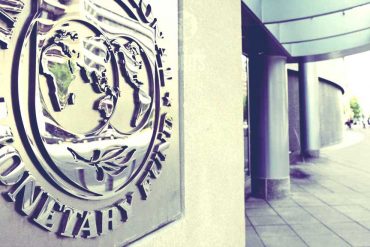
In his compelling bestseller, The Creature from Jekyll Island, Edward Griffin explores the intricate and often concealed mechanisms of global financial institutions, with a particular focus on the World Bank and the International Monetary Fund (IMF). One of the most striking themes in the book is the assertion that these institutions are not merely focused on economic development, but rather on promoting a hidden agenda—one...
In the annals of history, certain events have shaped the course of nations, and the true motivations behind them often lie beneath the surface. One such pivotal moment was America’s entry into World War I, a decision that had far-reaching consequences and was influenced by a complex interplay of interests. In this article, we delve into the revelations provided by Mr. Edward Griffin in his...
In a world that sometimes seems enamored with central planning and government control, Friedrich Hayek’s ideas on liberty and individualism continue to shine as a beacon of hope and reason. His seminal work, “The Road to Serfdom,” serves as a stark warning against the perils of planned societies and is a testament to the enduring importance of defending individual freedom. Hayek’s Rejection of Planned Societies: Friedrich Hayek, the renowned Austrian-British economist and philosopher, staunchly rejected the notion of planned societies, […]...

Categories

Maier files books