The 8 ancient festivities for each sign an essential point in nature’s yearly cycles. They are generally portrayed as 8 equally spaced spokes on a wheel symbolizing the year in total; the days on which they fall are approximately equally spaced on the calendar, as well. The wheel of the year consists of two sets of four holidays for each. One can find four sun-festivals linked with the sun’s position in the sky, dividing the...
Everything on Mythology and related to the Maier files series. Posts, Articles referring to myths, mythology, ancestral tales, folklore, gods and goddesses
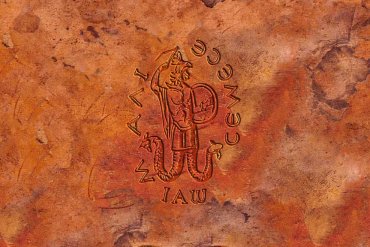
Carl Jung had written extensively on Abraxas. In his 1916 book called The Seven Sermons to the Dead, Jung called Abraxas a God higher than the Christian God and Devil that combines all opposites into one Being. Abraxas was a polymorphous world spirit which permeates — or even encompass — the very fabric of existence. Abraxas is … a thousand-armed polyp, coiled knot of winged serpents … the hermaphrodite of the earliest beginning … the...
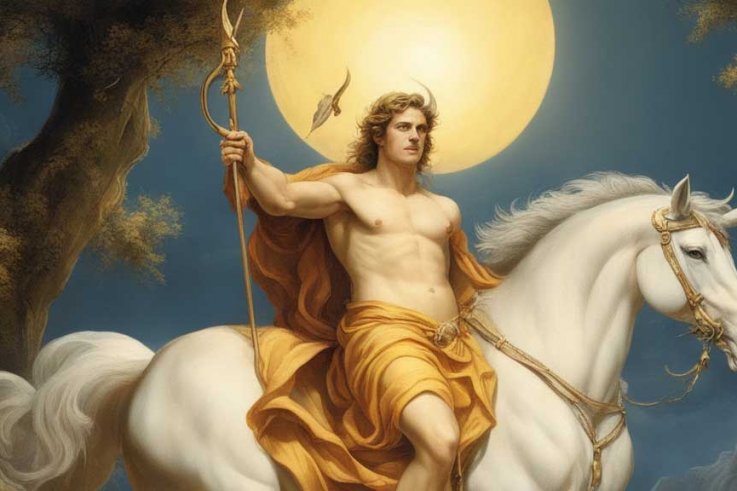
Apollo, the Bearer of Light, patron of poets and travellers, would never abandon his own in distress. He himself had become an outlaw, even seen as the Devil. But as he was not the Devil, he watched over, in accordance with the celestial laws, the forests and the routes. On the bridle of his charger, he left his carbuncle shining like the sun. When one of his minstrels died, he carried him above the clouds towards the “Mountain of Assembly […]...
Beneath the star-dusted hills of Epidaurus, where cicadas fall silent and the night breathes secrets older than the stones themselves, an ancient gateway broods. The Asclepieion, legendary healing sanctuary of the Greeks, looms in the twilight—a colonnaded mystery perched between history and myth. Its heart is the abaton: a shadowed, subterranean chamber where the scent of myrrh coils thick as fog and sacred snakes—serpents of renewal—glide in silence, their eyes glinting like fragments of a...
In Celtic Scotland there exist plenty traditions of sacred locations, places and folklore about people crossing into the Otherworld, a number of which are identified with sorcha (pronounced “sahkhaa”). This is an ancient phrase that means both ‘paradise’ and ‘illuminated being.’ Once again there’s a similarity with Egypt. Because the syllable ka is their word for ‘risen soul or awareness.’ Sidh Chailleann is the core of Scottish Otherworld tradition. This mountain marks the geodetic center...
It was Rodin who stated that “Man never invented anything new, only discovered things.” Although it’s correct to say that certain symbols have been man-made for a particular purpose, it’s just as correct to argue that everything is somehow inspired by the natural world around us, by the forms of nature, plants, animals, the elements. Even a reaction against the fluid forms of nature is usually inspired by a desire to offer an alternative. Occasionally the revelation of a natural […]...
Crows are brought up in the mythology of countless cultures around the world as they are frequently characterised as guides for traveling between worlds. European folklore explains that crows convene courts, pass judgments, and also execute guilty members. Connected with the Goddess’s death aspect, crows came to be perceived as evil or simply fearsome. Witches’ foot In medieval days, finding the foot of a crow, often referred to as a witches’ foot, was considered a...
For centuries, the Temple of Apollo at Delphi in central Greece contained the most prestigious oracle in the Graeco-Roman world, a favorite of public officials and individuals alike. The oracle was said to relay prophetic messages and words of counsel from Python, the wise serpent son of the Mother-goddess Delphyne or from the Moon-goddess Artemis through their priestess daughters, the Pythonesses or Pythia. According to myth, the god Apollo murdered Delphyne and claimed the shrine...
Just as the daylight penetrates at dawn through every crack and crevice, says the author of the Homeric Hymn, so Hermes slipped silently in through the keyhole of the cavern which gave him birth. How plastic, mobile, and ambiguous is the nature of this god, whose feminine companions are Hermione, Harmonia, and above all Iris, who precedes him with breezy feet and wings of gold! Complex figure In Greek mythology, Hermes appears as an engaging and complex figure, in forms […]...
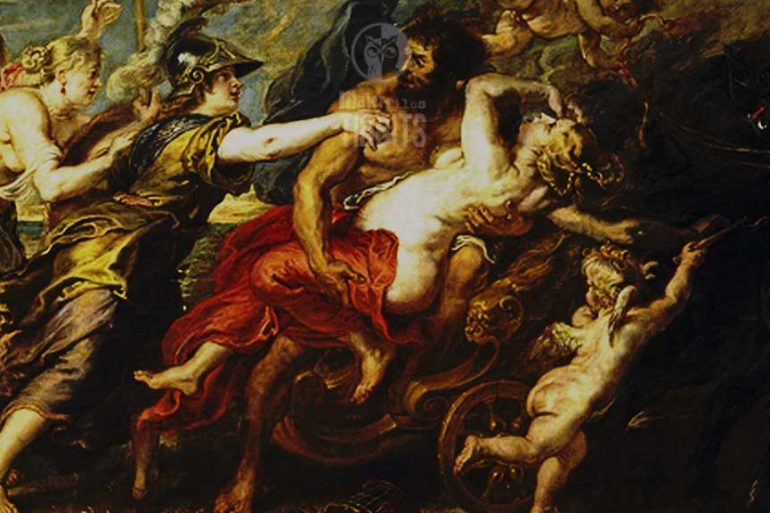
Harvest traditions have roots in Eleusis. The foundation of the Mysteries of Eleusis was the story of Demeter and Persephone. In this tale, Hades fell in love with Persephone and kidnapped her from the fields where she played, taking her back to his kingdom in the underworld. When Demeter discovered her child missing, she searched everywhere on Earth for her. When at last she received word that Hades was keeping her child, Demeter refused to...
Eleusis or the sacred Eleusinian mysteries of the Greeks date back to the fifth century BC and were the most popular and influential of the cults, and it has been said that nowhere did the ancient mysteries appear in such human, vital, and colorful form. The cult of Eleusis centered around the myth of Demeter (Ceres), the great mother of agriculture and vegetation, and her daughter Persephone, queen of the Greek underworld, the original name...
If you wanted to erase a god from history, which one would be hardest to kill? Not the god of cunning — you could outlast him by being patient. Not the god of thunder — you could cut down his oak and build a chapel. But the goddess of desire itself? The goddess whose domain is not belief or ritual or sacred mountains, but the body — the need to be fertile, to be loved, to continue? How do you […]...