A former MI6 officer, one of the few to have risen to become ‘C’ or Chief of the Service, takes pleasure in recounting a story. Framed by a collection of John le Carré’s novels on the bookshelves behind him, he tells it with a boyish smile and a playful twinkle in the eye which suggests a mischievousness not entirely lost to age. The story concerns a young officer making his...
The story of Klaus Fuchs is a tale that seamlessly weaves together elements of mystery, espionage, and scientific genius. Arrested in 1950 for leaking atomic secrets to the Soviet Union, Fuchs was initially branded a traitor by the British press. Fleet Street’s sensational headlines claimed he had sold the secrets of the atom bomb to the Russians, but as the dust of hysteria settled, the true nature of Fuchs’s espionage...
Part I of the series “Verrat an der Ostfront — The Lost Victory 1941–42” History often hides its deepest fractures behind the noise of marching armies. From a distance, nations appear unified, purposeful, moving like singular organisms toward their fate. Yet, as Friedrich Georg’s Verrat an der Ostfront reveals with quiet, merciless precision, the Germany that prepared for the great struggle in the East was no such organism. It was...
The true story of Dusko Popov. He knew he’d have to kill him. It was late July 1943. In a luxury villa salon on Portugal’s Riviera, British double agent Dusko Popov waited for his German controller, Major Ludovico von Karsthoff. By now his Abwehr minder had more than enough evidence to believe Dusko was doubling for the Allies. British Colonel Tar Robertson had warned him not to return. How would...
“Merkel entmachtet BND: USA kontrollieren Spionage in Deutschland” (article – JUNE 2016) “Merkel Ousts BND: US to Control German Espionage,” a new law will soon be passed in the German parliament and be approved by Chancellor Angela Merkel, which will make Germany’s version of the CIA, the Bundesnachrichtendienst (BND), nothing more than a branch of the CIA, to such an extreme degree, that even U.S. corporate espionage against German companies...
Part II of the series “Verrat an der Ostfront — The Lost Victory 1941–42” When the divisions of the Wehrmacht crossed the frontier on 22 June 1941, they carried with them not only the weight of an immense military gamble, but the burden of errors that were no accidents and oversights that defy simple explanation. The first weeks of Barbarossa have often been described as a triumph of operational genius...
This article is part of an ongoing investigation into the occult and intelligence networks that operated across national boundaries during and after the Second World War. It follows our recent pieces on Rudolf von Sebottendorf and the Thule Society. It should be read alongside our existing articles on Rudolf Hess and British intelligence’s documented use of occult operatives. There is a phrase that appears in a British intelligence memo dated...
Joan Miller died in June 1984. Despite efforts by MI5 Miller’s daughter managed to get her mother’s autobiography, One Girl’s War: Personal Exploits in MI5’s Most Secret Station, published in Ireland in 1986. Joan Miller was born in 1918. After leaving boarding school at 16 she found work in a tea-shop in Andover. This was followed by the post of an office girl at Elizabeth Arden. Later she was promoted...
War is older than History. Battle axes of polished stone found in late Neolithic culture, and the arms of war have appeared in every society since, escalating from cavemen’s weapons of personal destruction to nations’ weapons of mass destruction. Vicious fights evolved into nation-versus-nation and culture-versus-culture wars. Covered within every war is a secret war whose actions may never be chronicled. Secret wars Because of the lack of documents, historians...
T-Force … In the spring of 1945 as the Allied army advanced into Germany there was one objective paramount for the vast majority of its troops – the prompt defeat of the Germans on the battlefield and the swift restoration of peace. However, there was one unit in and around the frontlines whose aim was very different. Unlike their frontline colleagues, these men were actively discouraged from engaging with the...
The British enjoy deceiving their enemies. When the Prussian strategist Carl von Clausewitz defined war in 1833 as ‘those acts of force to compel our enemy to do our will’, he missed out the dimension that the British political philosopher Thomas Hobbes had spotted nearly two centuries earlier: ‘Force and fraud are in war the two cardinal virtues.’ ‘The British like to pretend,’ observes a former US Ambassador, Raymond Seitz....
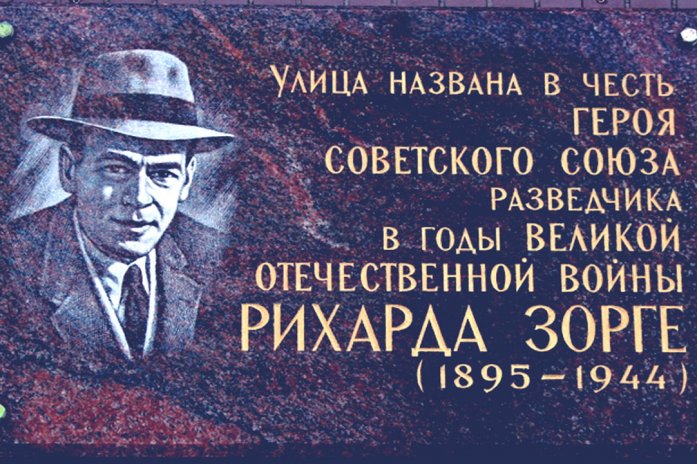
Richard Sorge was a bad man who became a great spy – indeed one of the greatest spies who ever lived. The espionage network that he built in pre-war Tokyo put him at just one degree of separation from the highest echelons of power in Germany, Japan and the Soviet Union. Sorge’s best friend, employer and unwitting informant Eugen Ott, German ambassador to Japan, spoke regularly to Hitler. Sorge’s top...