Since it is quite impossible to understand the history of the twentieth century without some understanding of the role played by money in domestic affairs and in foreign affairs, as well as the role played by bankers in economic life and in political life, we must take a glance at each of these four subjects. – A quote from professor Carroll Quigley, (Tragedy and Hope: A History of the World In...
On March 11, 2026, the Deutsche Finanzagentur brought €5 billion in 10-year Bunds to market. It was a routine operation in a routine year. Yet, when the bidding closed, the market had signaled a departure from the script: only €3.8 billion was allocated. The official terminology calls this a ‘technical failure’—a glitch in the machinery of issuance. But for those who look past the yield curves and the ECB’s shadow,...
In 1899 Alexander Del Mar stated in his book “Barbara Villiers or A history of Monetary Crimes”, this: FROM the remotest time to the seventeenth century of our era, the right to coin money and to regulate its value (by giving it denominations, a belief of worth) and by limiting or increasing the quantity of it in circulation, was the exclusive privilege of the State. In 1604, in the celebrated case of the Mixed Moneys,’ this privilege was affirmed under […]...
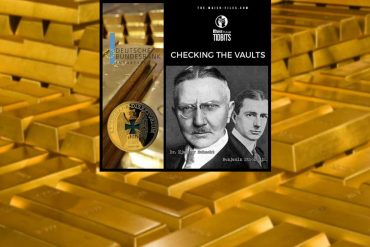
A large portion of Germany’s massive gold reserves are stored abroad, mainly in the Federal Reserve in New York. But are the bars really where they are supposed to be? A dispute has broken out over whether the central bank needs to check on its gold. Can Germany trust its international partners? Gold has been natural money for thousands of years. It has been used throughout history either as physical...
The whispers of a quantum revolution are growing louder, and with them, an ominous warning: the secrets of the past may not remain hidden for much longer. A recent initiative in Switzerland has raised the alarm, urging financial institutions to prepare for a world where quantum computers can break today’s most advanced encryption methods. But this concern extends far beyond banking—it reaches into the very foundations of secrecy, intelligence, and...
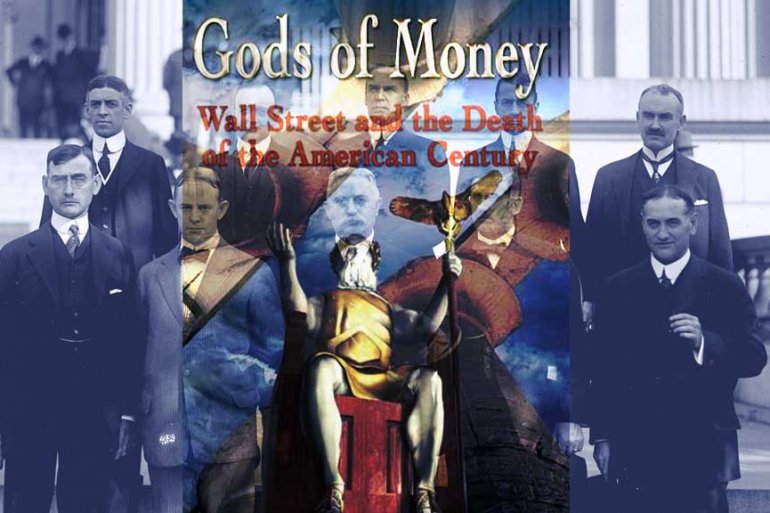
“The House of Morgan” is about the rise, fall, and resurrection of an American banking empire—the House of Morgan. Perhaps no other institution has been so encrusted with legend, so ripe with mystery, or exposed to such bitter polemics. Until 1989, J. P. Morgan and Company solemnly presided over American finance from the “Corner” of Broad and Wall. Flanked by the New York Stock Exchange and Federal Hall, the short building at 23 Wall Street, with its unmarked, catercorner entrance, […]...
Few people truly understand the complexities involved with central banking. Most people throughout modern history have made the terrible mistake of not understanding the relevance of their nation’s central banking scheme and a centrally planned economy to their own wealth preservation. Best example is the American FED. But America is not unique in this economic plunder, as private international banking interests have long sought to collude with governments in an...
Picture, if you will, a scene from any parliamentary debate you’ve been unfortunate enough to witness. There’s the theatrical gasp—perfectly timed, mind you—followed by the hand pressed dramatically to the chest, then the solemn invocation of “working families” or “our children’s future.” It’s magnificent theater, really. The only thing missing is honesty about being theater. H.L. Mencken, that delightfully cantankerous observer of American democracy, called these performers “courtiers of democracy”...
It is rather like entering a cinema midway through a grand drama. The screen flickers with the ruins of once-vibrant cities—Berlin’s spires shadowed, Paris’s boulevards hushed, London’s markets subdued. Families drift apart like leaves in a chill wind. Nations murmur of “community care” from distant chambers in Brussels, their ancient borders softening into mist. Births grow scarce, traditions fade. One pauses, puzzled: What finale is this? Who might have shaped such a script? Perhaps a quiet rewind, peering back through […]...
The change of the Roman ethnic make-up contributed to the empire’s ruin. Tenney Frank earned his A.B. at the University of Kansas in 1898 and A.M. the following year. Frank went on to receive his Ph.D. at the University of Chicago in 1903. Frank taught at Bryn Mawr College as Professor of Latin from 1904 until 1919, when he moved to the Johns Hopkins University. One of his remarkable researches...
Few economic subjects are more tangled, more confused than money. Quarrels abound over “tight money” vs. “easy money,” over the roles of the Federal Reserve System and the Treasury, over various versions of the gold standard, etc. Should the government pump money into the economy or siphon it out? Which branch of the government? Should it encourage credit or restrain it? Should it return to the gold standard? If so,...
“History is bunk” is a cliché with which we are all familiar. Having studied usury and fractional reserve banking intently and knowing who was behind it all, when Henry Ford uttered those famous words in 1916, what he really meant to say is that history is untrustworthy. The second factor is that history is full of omissions, which Ezra Pound warned students of the University of Wisconsin in a paper he wrote for them in the spring of 1935. Finally, […]...