Part I of the series “Verrat an der Ostfront — The Lost Victory 1941–42” History often hides its deepest fractures behind the noise of marching armies. From a distance, nations appear unified, purposeful, moving like singular organisms toward their fate. Yet, as Friedrich Georg’s Verrat an der Ostfront reveals with quiet, merciless precision, the Germany that prepared for the great struggle in the East was no such organism. It was...
In the labyrinthine world of the Maier Files mysteries, memory is not merely a faculty of the mind but a sacred vessel—Minne, the ancient Germanic concept of mindful remembrance that preserves the soul’s heritage and the timeless values of honor, loyalty, and truth. It is through Minne that we guard against the erosion of our cultural essence, much like the hidden guardians in Otto Maier’s enigmatic tales. Yet, what happens...
The chaotic failure of the German response on D-Day was not an isolated event. As Friedrich Georg meticulously documents in Verrat in der Normandie, it was the opening act of a broader, more sinister drama that unfolded across the summer of 1944. The pattern that emerged was one of such consistent and catastrophic failure that it defies any explanation other than deliberate sabotage from within the highest echelons of the German command. This was not a mere military defeat; it […]...
The story of D-Day, as taught for decades, is a stirring tale of Allied courage and ingenuity. It is a narrative of the brave boys storming the forbidding Atlantic Wall, overcoming fierce German resistance through sheer grit and overwhelming material strength. It is a comforting story, simple in its moral binary. But like so much of history, the comforting story is often a veil drawn over a far more complex,...
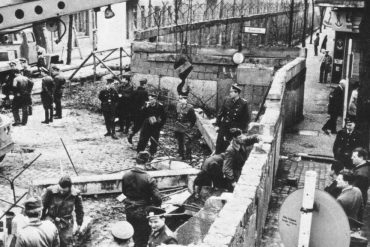
The curtain fell on the Second World War in May 1945, leaving a continent in ashes and a nation utterly broken. The German Reich lay prostrate, its cities reduced to landscapes of rubble and despair. In Berlin alone, 180,000 of 250,000 buildings were destroyed. Across the battered nation, over five million homes were uninhabitable. From the skeletal remains of these ruins, 2.8 million Berliners emerged, eking out a desperate existence...
History books often treat the redrawing of maps as an act of diplomacy, but for millions of people, each new border meant devastation. Nowhere is this clearer than in the story of the Oder-Neisse line—the border between Germany and Poland, drawn in the aftermath of World War II. This line, enacted at the 1945 Potsdam Conference by Stalin and reluctantly accepted by the Western Allies, uprooted over 14 million Germans, turning once-thriving regions into lands of mourning, silence, and loss. […]...
In the shadows of history’s pages lies a tragedy of immense proportions – one deliberately obscured from worldwide consciousness. While much has been written about the crimes committed by Germans during World War II, a deafening silence surrounds the crimes committed against Germans. This silence must be broken. The Systematic Expulsion: A Crime Against Humanity In the final days of World War II and primarily after Germany’s capitulation on May...
At Maier Files Tidbits, we delve into the enigmatic and the unexplained, where history intertwines with the supernatural. In the remote mountains of Auvergne-Rhône-Alpes, France, amidst the crumbling ruins of an ancient monastery, a peculiar discovery whispers of secrets long buried. A plant, steeped in bitter mystique, grows wild among the stones of Chartreuse de Bonnefoy, a once-thriving Carthusian enclave. Known to some as the harbinger of the “Green Fairy”—a...
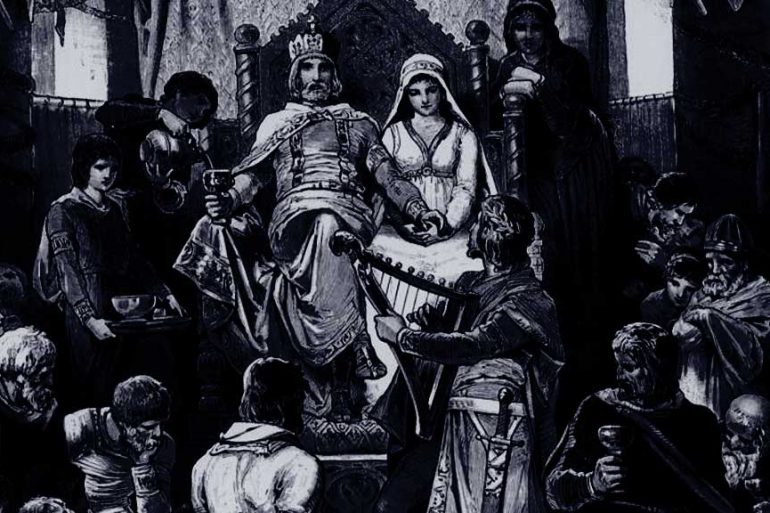
In the shadowed annals of medieval England, where the line between history and myth blurs like mist over a battlefield, one name howls through the centuries with feral resonance: Margaret of Anjou, the “She-Wolf” of Lancaster. Her saga is not merely one of thrones and bloodshed during the Wars of the Roses—it is a tapestry woven with eerie omens, spectral whispers, and an uncanny legacy that stretches into the modern age through the enigmatic figure of Ulva Naumann, a woman […]...
The passing of Pope John Paul II on April 2, 2005, marked a significant transition in the Catholic Church, but it also stirred curiosity about an ancient prophecy linked to the end of the papacy. With the traditional Rite of Extreme Unction, his death was solemnly acknowledged by the Vatican chamberlain, and Pope Benedict XVI took over. Yet, lurking behind this procession of Popes is a mysterious prediction from nearly...
Throughout history, Germany has faced consistent efforts to weaken and suppress its rise as a unified and powerful nation. This pattern, rooted in geopolitical and economic rivalry, stretches back centuries, involving a web of oligarchic interests, financial manipulation, and strategic wars. The banking powers, often traced to the Venetian oligarchs and their successors, have played a significant role in shaping these efforts. By understanding this historical thread, we can better...
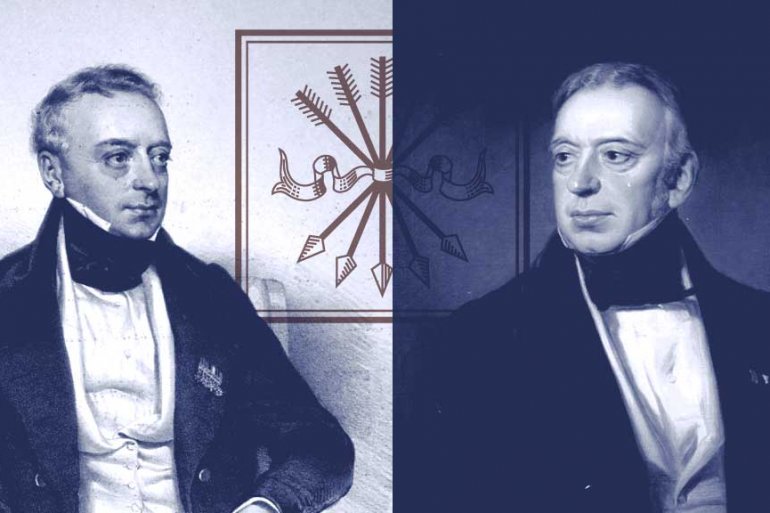
Throughout history, the true movers and shakers of world events have often remained shrouded in mystery, their influence concealed behind the facades of nations, ideologies, and economic systems. Among these hidden forces, few have wielded as much covert power as the Venetian oligarchy, a financial aristocracy that, though rarely acknowledged, has played a pivotal role in shaping the modern world. The story of Venice is not just about a city-state with remarkable canals and stunning architecture; it is about a […]...